Overview
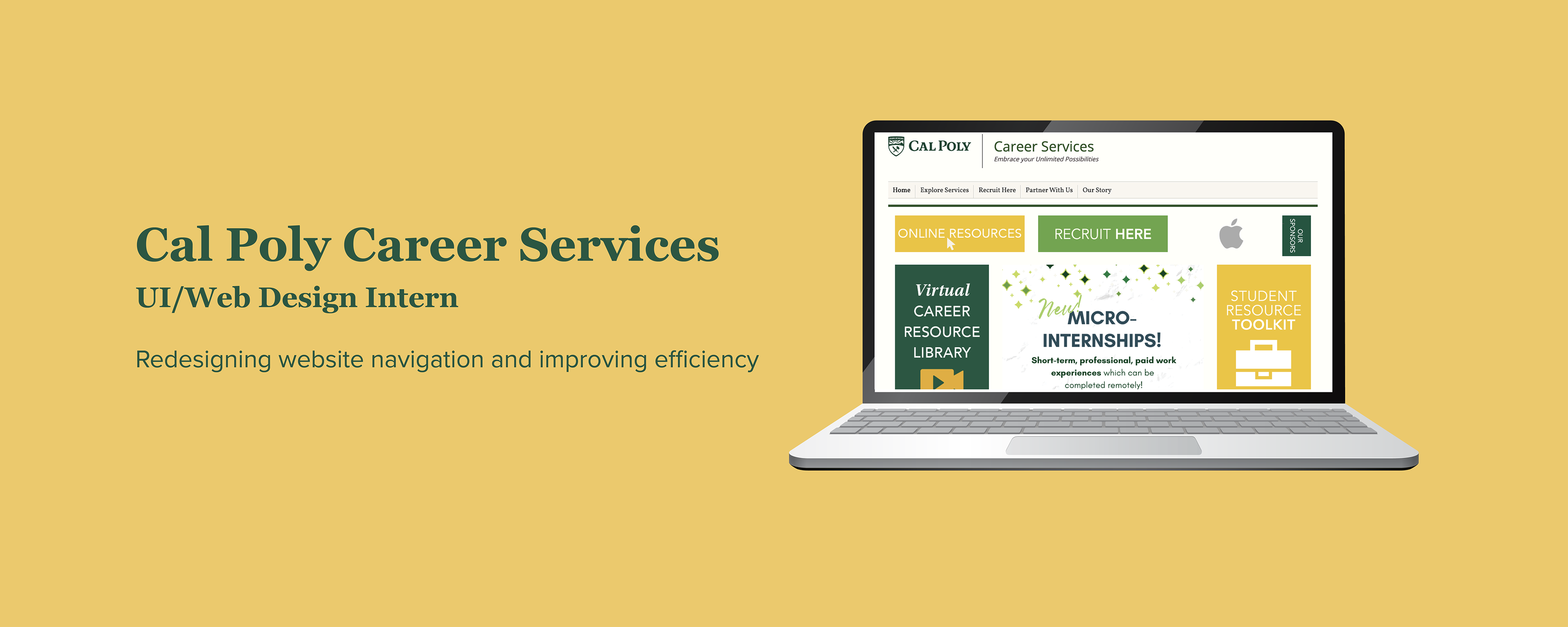
I joined Cal Poly Career Services as a UI/Web Design intern in September 2019. There are 40 employees who work at the department and 5 website team members. However, I was one of the few employees who knew front-end code (HTML5, CSS) and graphic design. I had to quickly learn Drupal and adhere to the existing style guide. I was tasked to keep the site running smoothly and execute tickets that were submitted by Career Services employees. Tickets often included designing new webpages and graphics or making changes to existing webpages. I also had frequent meetings with the website team to discuss how we can consolidate the website content and improve navigation.

Our Audience
Since Career Services empowers Cal poly students to achieve lifetime career success, our main users and audience is students. We want students to be excited about our website and be able to find resources they need efficiently and quickly.
My Role and Responsibilities
As a UI/Web Design Intern for Career Services, my responsibilities include:
1. Fulfilling website updates requested through support tickets
2. Creating new webpages and features when new initiatives are launched
3. Regular maintenance of site navigation and external links
4. Formatting graphic elements in Photoshop
5. Frequent and consistent communication with supervisor and other members of Career Services Web Team
September 2019
Identifying the Problem
Although my main task is to keep the website running efficiently, Career Services was expecting to receive new website templates from Cal Poly. The department needed me to organize our content and prepare to transfer our website from the old template to the new template. However, our website was cluttered with outdated links and excessive content which made navigating our website difficult.
This became our main problem: How can we improve site navigation and keep track of useful resources while getting rid of outdated content? This is where my work began.
I would like to note that due to COVID-19, we have yet to receive these templates. I continue to prepare our website for the transition.
January 2020
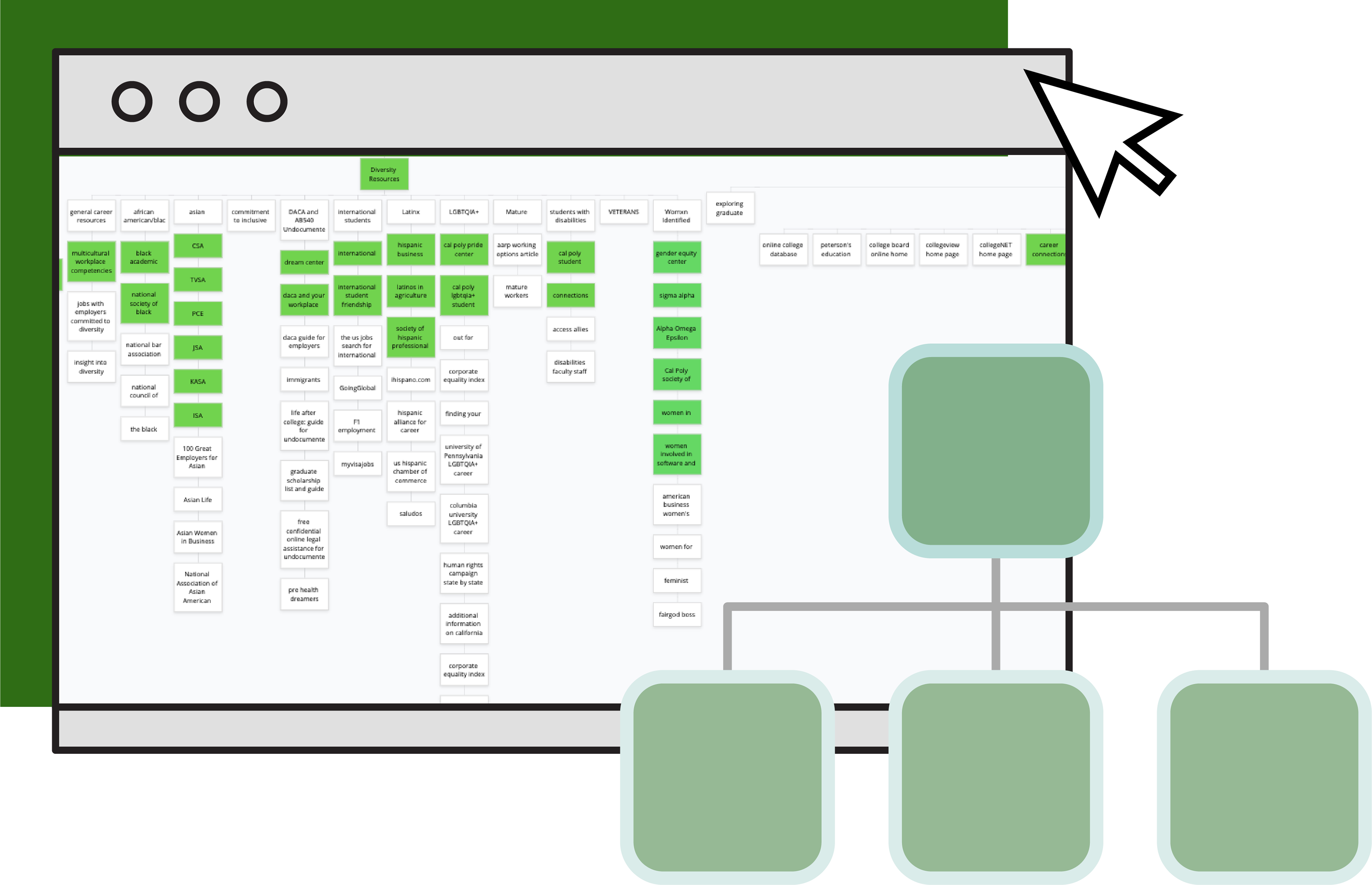
Sitemaps and Content Hierarchy
To organize our content and keep track of our website pages, I designed a sitemap. The sitemap showed our website’s hierarchy and provided a bird’s eye view of our content. Spoiler alert: it was extremely overwhelming.
February 2020 - Ongoing
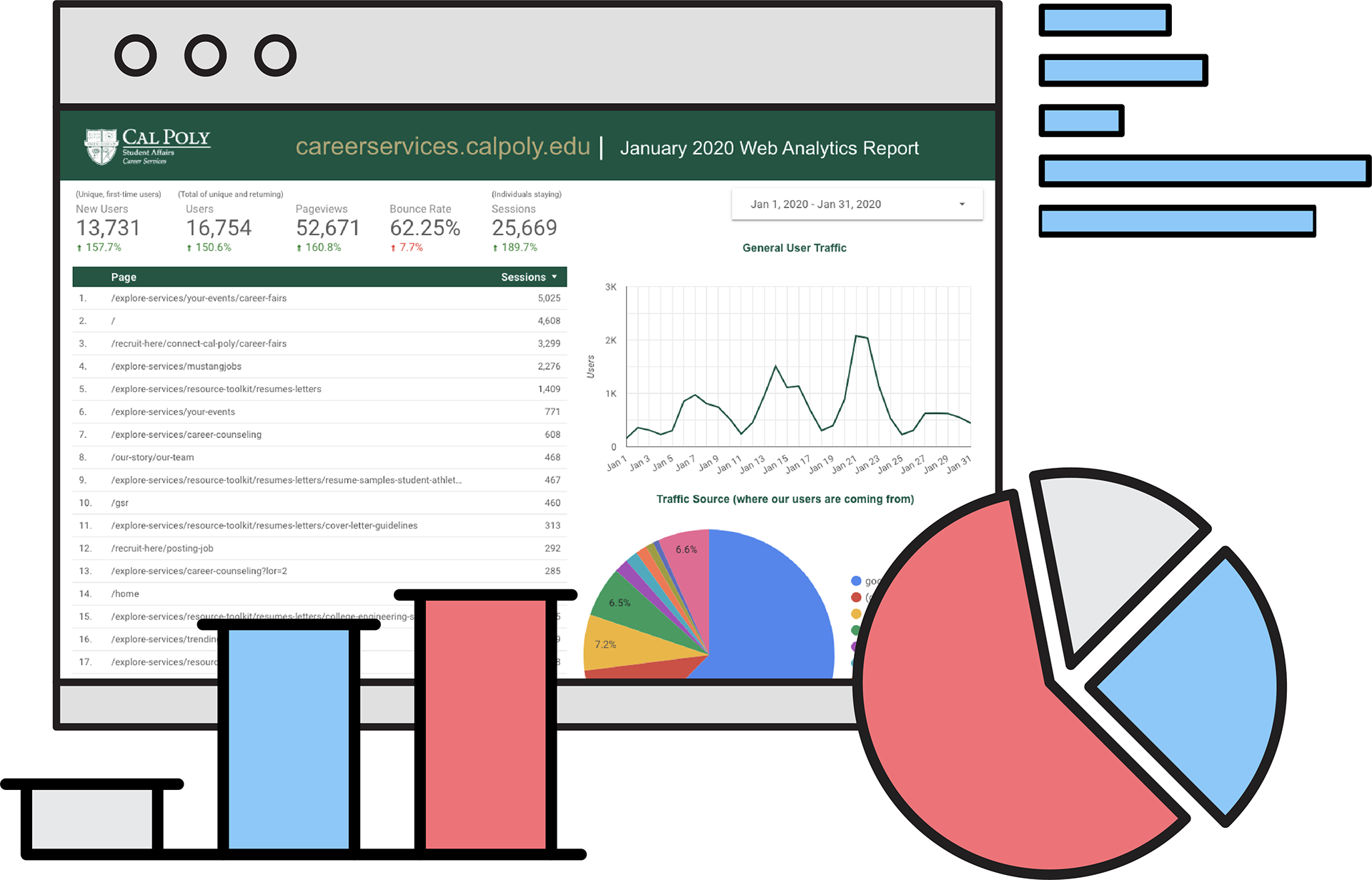
Tracking User Engagement through Google Analytics
We then discussed ways we could track which resources and webpages were visited most by students. I took it upon myself to get Google Analytics Certified so that I could understand our website analytics and report on engagement.
Every month, I would send my supervisor our Google Analytics reports so we can keep track of which links and pages are clicked the most.
February 2020
Website Cleanup
During this process, I continued to eliminate links and webpages that were outdated. I fixed links that were broken or had moved to another address. This helped clean up our website and made navigation a lot easier.
March 2020 - April 2020
Content Evaluation
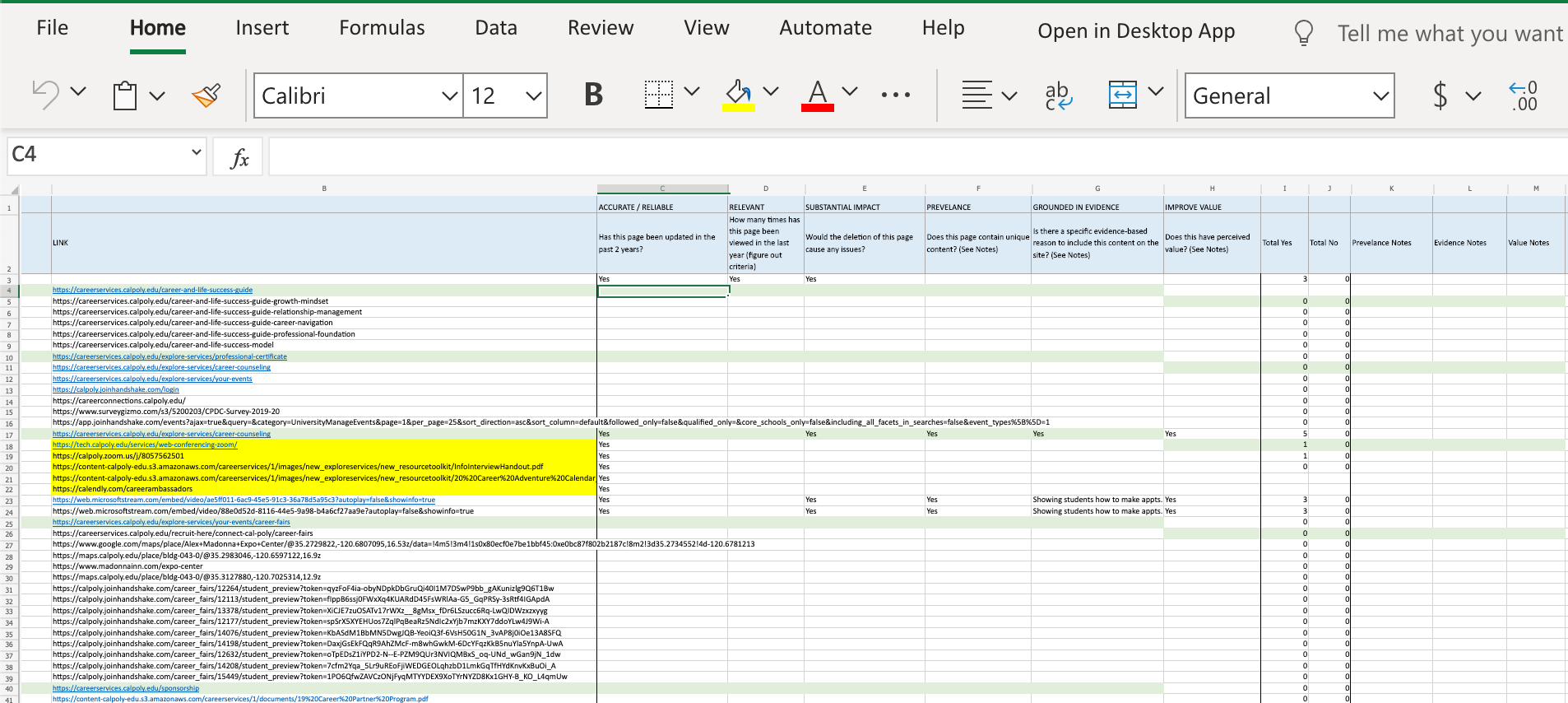
After we were able to track user engagement and clean up outdated content, the website team decided to take a more detailed approach to purging content. I was tasked to make a spreadsheet of all the webpages on our site. Each webpage was evaluated based on key questions.
1. How many times has this page been viewed in the last year?
2. Has this page been updated in the past 2 years?
3. Would deletion of this page cause any issues?
4. Does this page contain unique content?
5. Does this have perceived value?
Through this process we were able to pinpoint key webpages that were important for our website.
Present
Outcomes and Results
Although we have not received the new templates for our website, the website team and I were able to eliminate unnecessary content and focus on website navigation. I have fixed and edited over 150 broken links and have deleted over 20 outdated webpages. Through my hard work and dedication, I can keep the website running smoothly. The most rewarding part about my internship is being a resource for students at Cal Poly.
Working Remotely During the Pandemic
Since school was no longer in person, our department was faced with the challenge of working from home and meeting students’ needs virtually. Because of this, Cal Poly has still not sent us the new website templates. However, we continued to work on our transition by meeting biweekly to discuss the website and creating new and updated resources for students during COVID-19.
Continuing to Learn and Grow
Working at Career Services has been such a great experience. This internship taught me the importance of communication. Because tickets were submitted by different people in the staff, it often felt as if I had a lot of different clients. This required me to understand each employee’s goals and intentions and communicate my ideas clearly so that there is no confusion. I often “translated” complicated coding ideas and concepts. Furthermore, I love that I had a lot of creative freedom to try new web design assets. I have learned a lot during my time at Career Services and I am so excited to learn more!